The Debate Continues: Will Robots Replace the Human Workforce?
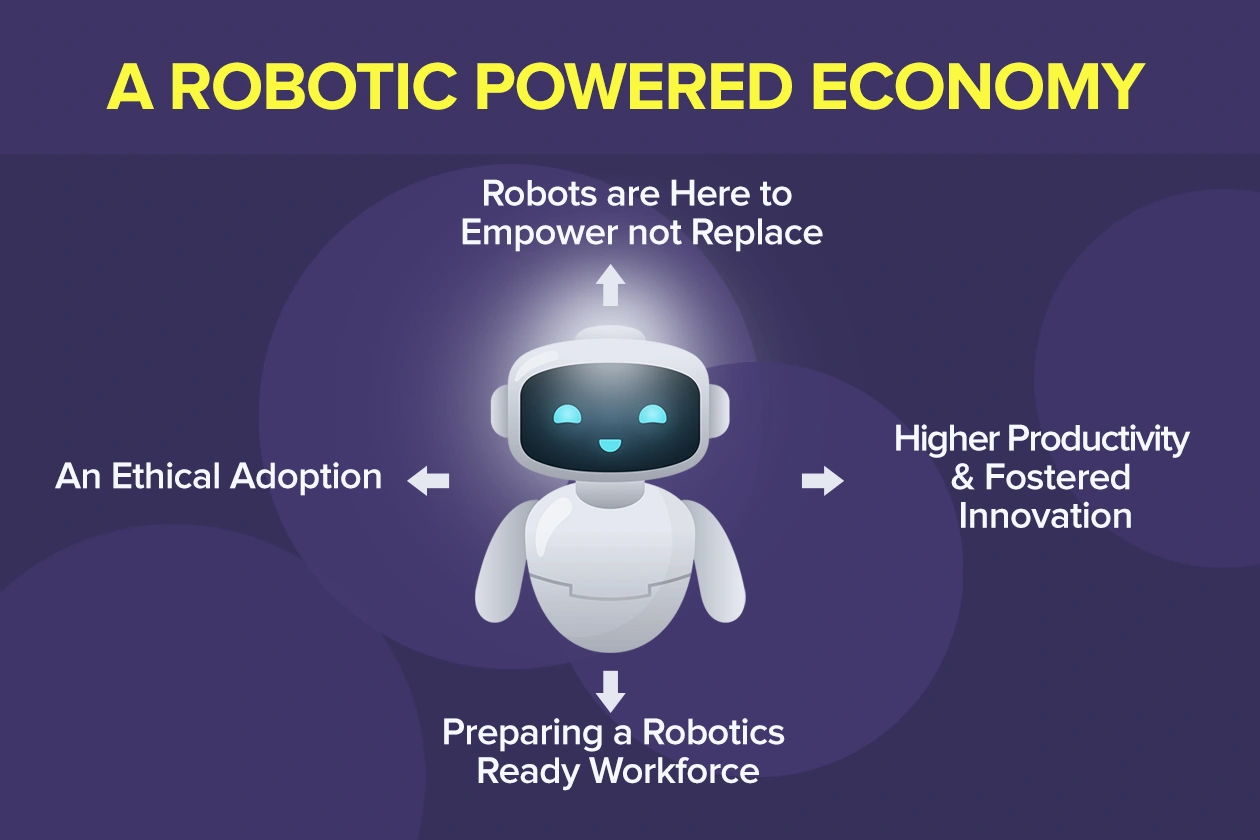
The “Digital Age” has compelled enterprises to mobilize in tandem with their customer base, opening stores in the cloud and on the web. By optimizing work processes and re-engineering business processes, the industrial age has undergone a digital transformation with e-business environments. While technologies like robotics are driving productivity, innovation, and economic growth, they are posing a drastic threat, such as job displacement and shifts in labor markets. While robotics as an economic power factor is reshaping the global economy, professionals are grappling with the question, “Will robots replace human laborers?”
As the debate rages on, this article ventures further into the evolving world of robotics, seeking fresh insights into whether machines will one day take the place of human labor.
How Robotics Could Influence the Economy?
The advent of robotics is reimagining industries, putting forth a range of opportunities and challenges to the global economy. With a profound impact on labor markets, productivity, and economic growth, robotic technology is increasingly advancing. Let us explore how this revolutionary technology impacts economic growth and makes way for human-machine collaboration.
1. A Nuanced Picture of Employment
With the integration of robots into workforces, we get a very nuanced picture of employment in today’s digital era. Robots, leveraging their tech-powered design and mechanisms, can significantly enhance work efficiency, raising concerns about job displacement. The growing adoption of robots across sectors can disrupt certain industries.
However, research shows that automation does not necessarily result in enormous job losses, as people fear observing its widespread adoption across industries. As it continues to reshape the labor market, the demand transcends toward job roles requiring skilled professionals to run, program, and maintain robotic systems. Although they replace repetitive tasks, they also open doors to creativity and innovation, facilitating new job categories and industries.
2. Amplifying Economic Growth and Productivity
According to the International Federation of Robotics (IFR), robots have the transformative power of steering economic progress. By optimizing operations and automating repetitive tasks, robots allow businesses to attain higher productivity and deliver more output with fewer resources. It liberates human workers, enabling them to concentrate on high-value and innovative activities. As a ripple effect of this productivity, countries experience improved economic performance.
3. A New Dawn of Workforce Transformation
Robotics has given birth to a new era of workforce transformation, compelling individuals to develop advanced technological skills and professionals to upskill as per the requirements of operating robots. As automation takes over specific business operations, the need for employees with advanced technical expertise, adaptability, and problem-solving capabilities has significantly risen.
Industries embracing robotic technologies on a large scale require workers with capabilities to leverage automation, driving innovation and efficiency. This has made the upskilling and reskilling initiatives a general phenomenon for industries to equip the workforce with the tools, knowledge, and skills to thrive in a rapidly changing economy.
4. Considering Ethical and Social Aspects
The integration of robotics comes with ethical and social challenges. Concerns surrounding cybersecurity, data privacy, and the ethical leveraging of artificial intelligence in business decision-making need to be addressed to ensure a successful integration. While adopting robotics, businesses must strike a balance between economic growth, technological advancement, and societal well-being. The responsible integration of robotics makes sure innovation benefits everyone.
5. Long -Term Implications
Implementing robots in your factories can drive long-term effects, depending on policies and socioeconomic factors. It is crucial to ensure that all the economic output powered by this technology is equally distributed. Policies must prompt reskilling and upskilling programs, supporting workers’ transitions into new roles and fostering inclusive growth.
Prioritization of these measures could eliminate the fear of a robotics labor replacement future. Instead, it would prepare the workforce for more diverse job roles for the future.
Top 3 Industries Adopting Robotics
Manufacturing
Manufacturing is one of the most widely adopted industries for robotics technology. With many repetitive tasks, robotics enables automation of material handling, product assembly, processing operations, and inspection. For example, the leading automotive company Tesla extensively uses robotic automation in its Gigafactories.
Construction
Integrating robotics into construction processes is a boon for laborers who used to execute heavy tasks manually a decade or two ago. With collaboration robots or cobots, construction companies exemplify human-machine collaboration in ensuring smooth operations. The Danish company Kobots’ Amigo is a voice-controlled mobile cutting robot series that helps workers automate cutting through smartphones, significantly reducing their work burden.
Medical Technology
Robotics in healthcare spans three areas: service, surgical assistance, and social robots. Robotic surgery helps physicians more on surgical decisions and eliminates surgical inaccuracies. On the other hand, service robots aid in repetitive tasks inside hospitals, and social robots interact with patients to deliver collaborative activities and speed up recovery. Virtual Incision Corporation has developed the MIRA Surgical System, the world’s first miniaturized robotic-assisted surgery device.
With The Silicon Journal, we are committed to delivering information related to the world business landscape and the factors influencing the global economy. From politics to business, The Silicon Journal covers a wide range of topics for readers to stay informed and ahead of market competition.
Related Articles


Recent Articles




Latest Issue