Riding the Wave of the Semiconductor Boom
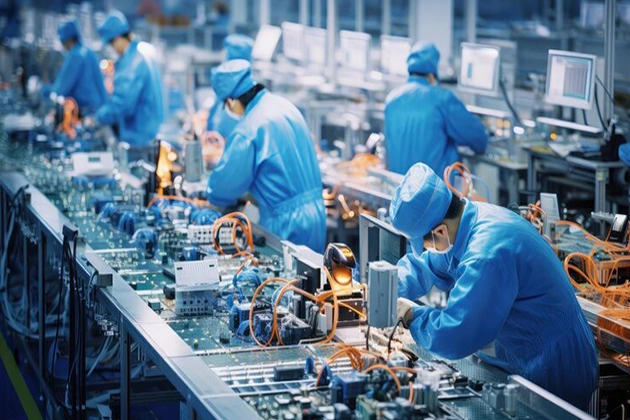
Semiconductors have remained the driving force behind technological evolution for over 70 years, initiating fundamental transformations of several industries globally. Semiconductor innovations have shaped the development of crucial applications across the economy, from personal computing to data centers and cloud computing. As we look ahead, the semiconductor industry’s trajectory will be fueled by megatrends such as digitization, electrification, and the intensifying deployment of artificial intelligence (AI) and Internet of Things (IoT) technologies.
As a rising voice in business media, The Silicon Journal delivers the latest news, ensuring our readers stay informed, empowered, and tuned in to the pulse of the global business world.
The Chip Boom: Inside the Global Semiconductor Surge
The semiconductor industry has long operated as a global supply chain. However, over the last five years, the pandemic and escalating trade tensions have unveiled the need to secure supply chain sovereignty through greater investment in local production. The COVID-driven lockdown compelled companies to work remotely, and individuals to invest more in home electronics, accelerating the demand for semiconductors.
At the same time, the accelerated adoption of IoT technologies generated more demand. As some sectors overlooked the level of demand, suppliers struggled to secure capacity. This led to a global chip shortage from the second half of 2020 until the end of 2022. Amidst this, oversupply and lesser demand resulted in excess inventory, pushing the industry toward a downturn in 2023. However, the market is now stabilizing, with semiconductor industry growth surpassing the revenue decline from 2022.
Growth of the U.S. Semiconductor Industry
The pioneering U.S. semiconductor industry contributes to over 50% of global chip revenues. With global rising competition, America’s share of global chip manufacturing capability was slumping from 37% in 1990 to 10% by 2022. However, through government initiatives and research investments, the U.S. government has managed to revive the situation. Over the past few years, 28 states declared 100 projects, totalling over half a trillion dollars in private investment. These projects are expected to help triple the U.S. chipmaking capacity by 2032. They are projected to create and support more than 500,000 American jobs, including 68,000 facility jobs in the semiconductor ecosystem.
To strengthen this initiative, leaders in Washington enacted laws that empower a tax incentive, the Advanced Manufacturing Investment Credit (AMIC). AMIC has catalyzed these company investments. Also, American firms spend more on R&D than any other country’s semiconductor industry. This investment drives innovation in the U.S. semiconductor industry and will help maintain global sales market leadership and jobs throughout the United States.
AI, IoT, and Automotive: The Key Growth Drivers
The semiconductor industry comprises seven component types: memory, microcomponent, logic, optoelectronic, analog, discrete, and sensor. Among these components, memory and logic products are ruling the industry and will continue to comprise the largest share of semiconductor revenue. Memory and logic products contribute to the making of a wide array of applications, including computing, mobile devices, automotive, and industrial products. In today’s data-driven world, the demand for more efficient memory solutions will continue to rise and will be fortified by the accelerating adoption of AI, IoT, and cloud computing across sectors. Along with that, the proliferation of data centers globally reinforces the significance of logic and memory in managing enormous amounts of real-time data.
Foreign-born CEOs: Reshaping the Trajectory of the Semiconductor Industry
With President Donald Trump’s announcement of a $100,000 fee on new H-1B petitions for foreign workers, the foreign working force in the US faced a major jolt. According to a Global Semiconductor Alliance report, Foreign-born tech CEOs lead half of the US semiconductor companies. CEOs like Jensen Huang, the Taiwan-born founder and CEO of Nvidia, have led the semiconductor and global AI innovations with GPUs. As semiconductor demand rises worldwide, the success of U.S. chipmakers depends on their ability to empower, recruit, and retain global talent.
AI Applications Reimagining the Semiconductor Industry
AI adoption across industries is reimaging the growth of the semiconductor industry. Industries nowadays are increasingly demanding advanced semiconductor solutions to regulate intensive computational tasks. Technologies like machine learning, data analytics, and neural networks will continue to transform and shape the future of the semiconductor industry.
How is the Automotive Industry Accelerating the Growth of the Semiconductor Industry?
The automotive sector is forecasted to remain at the forefront of the fastest-growing semiconductor market, with a projected CAGR of 10% from 2024 to 2030. A PwC report suggests that battery electric vehicles (BEV) within the automobile industry rely on power electronics and power management integrated circuits to drive motors and manage battery systems. BEVs comprise more than double the semiconductor content because of their high-voltage systems.
Alongside BEVs, people’s inclination toward software-defined vehicles (SDVs) has also been reshaping the automotive sector. As SDVs rely on advanced software functions, it involve faster innovation cycles. Additionally, the emerging trends like autonomous driving and enhanced comfort features are driving demand for high-performance semiconductors. The doubled value of the semiconductor content from $420 in 2019 to $800 in 2023 is expected to reach $1,350 by 2030.
The Rising IoT Semiconductor Industry
The Philadelphia Semiconductor Index, which tracks the value of the 30 largest semiconductor firms globally, has increased from $80 in 2016 to $416 in 2021. This staggering performance of semiconductor firms’ value is attributed to several factors, and the rapid growth of connected Internet of Things (IoT) devices. By the end of 2025, the number of IoT connections is projected to grow by 30 billion. Consumer IoT devices such as smartwatches and wireless accessories have experienced a rise in demand, prompting many companies to enter the IoT ecosystem. The IoT semiconductor component market is forecasted to grow at a CAGR of 19% from $33 billion in 2020 to $80 billion in 2025. From IoT microcontrollers to IoT security chipsets and modules. Although the IoT semiconductor market is still at its early stage, the penetration of semiconductors is expected to grow from 7% to 12% by 2025.
Evaluating the Position of the Semiconductor Industry in the Global Competitiveness Index
Now, let us evaluate how the growth of the semiconductor industry is helping it achieve recognition in the Global Competitiveness Index. The semiconductor industry’s global competitiveness is defined by its critical role in technological advancement and economic growth, especially in the AI sector. With the United States and China competing for dominance through policies like the CHIPS Act and the Science Act, and remarkable investments, the global semiconductor industry is driving innovation and growth.
Although the global competitiveness report by the World Economic Forum was paused in 2019, other reports, like the IMD World Competitiveness Center, are covering relevant factors related to the semiconductor industry. According to the IMD World Competitiveness Ranking 2025, Taiwan is ranked 6th as a semiconductor hub globally.
Additionally, in the Global Innovation Index (GII 2025), China’s position in the semiconductor value chain is a strength. Apart from that, Nvidia leads the top semiconductor company by market capitalization in October 2025, followed by Broadcom and TSMC. However, despite the rapid growth of the industry, the key challenges like global talent shortage, capital investment needs, and geopolitical fragmentation affecting supply chains still need to be addressed proactively by global semiconductor firms.
Related Articles


Recent Articles





Latest Issue