How are Crypto Trading Platforms Reimagining the Global Economy?
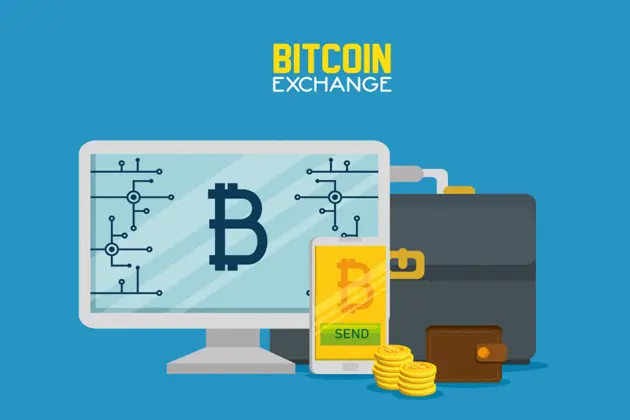
As the world of money changes continuously, the transactional scenario is also changing in this digitalized finance world. Earlier, people relied on cash, checks, and bank transfers for transactions, but today we have a new face of money, ‘cryptocurrency.’ In the last few years, cryptocurrency has evolved into more than just digital coins. Leveraging the crypto trading platforms, investors are investing in these digital coins and changing people’s perceptions toward digital money. Through crypto trading, individuals, crypto firms, and investors are enjoying multiple benefits of money transferring. With the birth of the first cryptocurrency, Bitcoin, in 2009, people were exposed to a new way of handling money other than banks. Over time, more cryptos emerged, like Ethereum, Litecoin, Ripple, and many others.
These digital coins are sent to someone without an outrageously priced bank serving as an intermediary. Cryptocurrency is a form of digital money that uses blockchain technology, a digital ledger that records every transaction, to transact money through its trading platforms.
This article enlightens us about this digital money, its uses, and exchanges that impact the global economy to a large extent. It also sheds light on various components of this type of transaction, making it a trending trading initiative with great potential to transform the picture of the global economy in the near future.
The Evolution of Money
The history of money evolved from barter systems to valuable coins, transitioning through paper currency. Now, as we advance into the digital era of currencies, we experience their larger impact on societal functions. However, what remains unchanged is the fundamental functions of money throughout its history, spanning thousands of years. They include:
-
Money acts as a medium of exchange for selling or purchasing any goods or services
-
It is stored for future usage
-
Money is a unit of account that is used to value goods or services
Digital currency is getting popular globally because it replicates the private firm-operated electronic wallets with a sovereign facility. According to studies, there are three types of digital currencies: central bank digital currency, cryptocurrency, and stablecoins. Cryptocurrencies and stablecoins are exchanged between people and entities, backed by a central bank.
The Impact of Cryptocurrencies on the Global Economy
Cryptocurrencies are expected to become more versatile due to regular financial transactions. Now, with these digital coins, the financial sector is witnessing a ground-breaking revolution. Cryptocurrency exchanges decrease the dependency of traders and individuals on intermediaries. At the outset of this digital currency, there was a lot of skepticism about cryptocurrencies and decentralized finance (DeFi). However, with governments validating the effectiveness of these two, people’s attitude toward digital money changed radically. Since January 2025, the US government has been promoting Bitcoin and other cryptocurrencies.
How Cryptocurrency Exchanges are Influencing the Global Economy?
The ever-growing changes in the financial world are making way for cryptocurrency exchanges to expand their boundaries and driving a noteworthy impact on the global economy. Listed below are some of the significant influences of these exchanges-
Magnifying International Transactions
A cryptocurrency exchange enables millions of people to be involved in cross-border payments. Through these exchanges, people can transfer money at an affordable and faster rate than banks. Companies dealing with crypto exchanges streamline transnational payments, allowing businesses to save a great deal of money and time. Conventionally, international payments rely on intermediaries, like banks and SWIFT, with high fees and lengthy processing times. However, with cryptocurrencies, international payments have become instant and happen at a lower cost.
Decentralized Finance and Smart Contracts
DeFi is a new financial paradigm that harnesses blockchain technology to provide financial services and solutions through smart contracts. As decentralized finance platforms are run using a blockchain ledger, the cryptocurrency exchanges are transparent, traceable, and time-bound. The use of this technology makes it impossible to manipulate financial transactions. Such features of these exchange platforms are gradually becoming the most viable alternative to traditional banking services, which lack transparency. Cryptocurrency exchanges are changing the scenario of global transactions, from borrowing to insurance and lending. Additionally, the smart contract feature enables safe agreements between multiple parties.
Improved Institutional Investment
A 2025 Institutional Investor Digital Assets Survey has shown that 59% of respondents plan to allocate more than 5% of their assets under management to cryptocurrencies. Since last year, public companies worldwide have collectively increased their bitcoin holdings by 120% and now hold over 859,000 of the 21 million bitcoin in total. Less than 5% of all spot bitcoin Exchange Traded Fund assets are held by long-term investors, and 15% are held by wealth management firms. Another data has shown that retail buyers in late 2024 have bought a plethora of cryptocurrencies after Donald Trump won the Presidential election and vowed to become a “crypto president.” Companies like Tesla are openly investing in Bitcoin, and cryptocurrencies are getting acceptance in mainstream financial portfolios.
Birth of Regenerative Finance and Crypto Projects
Regenerative finance, or ReFi, refers to crypto projects that enhance prosperity in terms of regenerating nature and the environment, and ensuring a more sustainable future. ReFi identifies the inherent value of nature and ecosystems in serving humanity. These projects may leverage blockchain to simplify payment tracking, embed automated smart contract functionality, and make reporting, monitoring, and verification credible and transparent. Keeping sustainability in mind, the domain of crypto mining is expected to undergo fleeting change and become ecologically sustainable in the next few years.
Enhanced Financial Inclusion
The growth of crypto currency leads to more financial inclusion. A decentralized finance system develops light-bordered financial devices with exceptional speed that do not rely on traditional infrastructure. With just an internet connection and a smartphone, individuals are accessing services such as loans, insurance, asset trading, and savings at a low cost and with fewer restrictions. Cryptocurrencies are now widely viewed as a tool for addressing financial inclusion, especially for the financially excluded population. Currently, 134 countries are looking for ways to explore digital currencies. With its growth in the global financial market, the future of finance will be more inclusive for the underprivileged population that is still at traditional banking.
Blockchain-Powered Issue-Solving Mechanisms
In this crypto world, there is an urgent need for a dispute resolution mechanism. Smart contracts and on-chain governance systems are facing resistance in decentralized ecosystems. Now, with cryptocurrency exchanges, transparent and blockchain-driven automated dispute resolutions are being carried out using legal frameworks.
Revolutionized Entrepreneurship
The advancements in these exchanges and the financial inclusion will lead to innovation and entrepreneurship. With digital assets, entrepreneurs are strengthening the existing digital economy. White labeled crypto exchanges offer a solution for businesses that aspire to launch their own cryptocurrency trading platforms. As it delivers an alternative to financial transactions without an intermediary, entrepreneurs are embracing such platforms for seamless payments and financial management.
Decentralized Identity Solutions
It is expected that the evolution of cryptocurrencies and exchanges will lead to improved protection. Therefore, many expect the rise of decentralized identity systems that are built on blockchain technology and control personal data. The decentralized systems eliminate the need for centralization, which is absent in traditional ID protection systems. These systems improve transparency, privacy, and security.
Among the rising media publication houses in the USA, The Silicon Journal is gradually making a place of its own through its exceptional insights on industries, technologies, innovation, and other business areas. Available in both print and digital form, this business magazine aspires to become one of the leading platforms for business executives, leaders, and entrepreneurs to connect.
Related Articles


Recent Articles





Latest Issue