Workplace Misconduct Scandals in the US
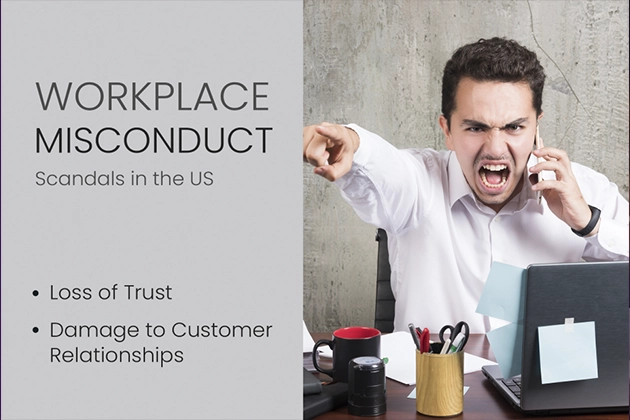
Workplace misconduct and harassment are becoming more discreet in the United States, and at the same time, becoming more open and identifiable, with workplace harassment claims increasing significantly. As workplace harassment continues to impact business reputation and day-to-day operations, addressing it has become more important than ever.
As an emerging business media publication in the US, The Silicon Journal is staying ahead by shedding light on topics and events that extensively influence modern businesses. Be it workplace misconduct or workplace safety, The Silicon Journal addresses all issues to help keep business leaders on the edge of advanced business running approaches.
Understanding Workplace Misconduct
Workplace misconduct isn’t just some rules that are designed for workers to abide by and face consequences if violated. The rules encompass practical actions taken against an individual or a team involved in some criminal activities or corruptive behavior. From minor policy violations to serious offenses, workplace misconduct can impact productivity, team morale, and company reputation as a whole.
American business giants such as Enron, Nissan, WorldCom, and FTX are some of the few examples of organizations where some of the most significant cases of workplace misconduct and corruption have occurred. Bernie Ebbers, Jeff Skilling, Martha Stewart, Elizabeth Holmes, and Carlos Ghosn are some of the high-profile leaders who faced criminal charges for breaking the law, violating stakeholder trust, making ethical mistakes, and causing extreme harm to their own reputations. Organizational CEOs and other workers are often found guilty of such accusations.
Whether you are a CEO, an HR professional, a team leader, or a manager, it is crucial to avoid falling prey to what counts as misconduct, ensuring workplace fairness, legal compliance, and a respectful environment. A CEO scandal's impacts on brand reputation can be far-reaching, causing long-term reputational damage to both the executive and the organization. The same goes for other organizational members as well.
#MeToo Movement and NDA: What does it tell about workplace misconduct?
The #MeToo movement triggered global interest in using non-disclosure agreements (NDAs) in the settlement of claims alleging sexual harassment at work. However, questions have been raised about the effectiveness of NDAs to hide allegations of serious and criminal behavior in the workplace. In response to this, investigative journalism, political inquiry, policy inquiry, public debate, and discussion ofc lawyers’ ethical obligations to enforce NDAs. Many went against the implementation of NDAs, demanding either a ban or constraints in its use.
The #MeToo movement has persuaded companies and government agencies to address sexual harassment claims. However, NDAs continue to raise eyebrows. Although NDAs are effective in protecting confidential information, they are often criticized for silencing victims and concealing workplace misconduct. In a workplace environment, NDAs are implemented to protect trade secrets or proprietary information, settlement terms in harassment or discrimination cases, and internal investigations or complaints. While employers claim NDAs to protect company interests, they are also used to prevent workers from discussing unlawful conduct. NDAs often create a culture of silence rather than accountability when used after a harassment complaint, discouraging others from coming forward.
Before the #MeToo movement, NDAs were a part of settlement agreements, where the victim employees were asked to sign one in exchange for their jobs or compensation. In federal and private sectors, the NDA practice led to criticism because it prevents transparency, protects offenders, and creates fear of retaliation.
The Speak Out Act (2022): A Legal Reform for NDAs
Sparked by the impact of the #MeToo movement, a cultural shift took place, which prohibited the application of NDAs in cases of sexual harassment in the workplace. The Speak Out Act of 2022 restricts employers from enforcing NDAs at the federal level that silence employees about sexual assault or harassment before a dispute arises. This law applies to agreements signed at the time of hiring or during employment, and not after a settlement.
However, several states have gone to a large extent to ban confidentiality clauses in harassment settlements. Other states need clear disclosures that victims can still report unlawful behavior to government agencies.
How Workplace Misconduct Scandals Impact Brand Reputation?
Maintaining a positive brand image is more important than ever before, as companies operate in a highly competitive business environment. Exercising unethical workplace behavior, such as fraud, discrimination, assault, and dishonesty, can lead to detrimental consequences and effects on the company or brand reputation. Listed below are some of the impacts that workplace misconduct can have on brand reputation.
1. Loss of Trust
Unethical behavior or workplace misconduct damages the trust and credibility that a company has built with its stakeholders, including investors, employees, and customers. Misconducts such as fraud, assault, sexual harassment, and unfair treatment can create skepticism among stakeholders, leading to a loss of reputation and sales altogether.
2. Damage to Customer Relationships
As consumers are increasingly becoming conscious of the ethical practices of their preferred companies, any unethical action can cause irreversible damage to customer relationships. Consumers quickly boycott brands accused of wrongdoing.
3. Difficulty in Attracting and Retaining Talents
A company with a bad reputation for carrying out ethical practices is less likely to attract talented workers and retain the hired talent, as safety issues discourage workers from working with such companies.
4. Financial and Legal Consequences
Engaging in workplace misconduct puts companies at risk of financial and legal consequences. For instance, environmental misconduct, fraud, and other unlawful practices can result in hefty fines or lawsuits.
Top Workplace Scandals in the USA
Let us check out the top four prominent workplace misconduct cases in the US that caused reputational damage to companies and individuals.
The Enron Scandal of 2001
Enron’s executives leveraged fraudulent accounting to hide billions in debt from failed deals. This led to bankruptcy, loss of billions of dollars for employees and investors, and the collapse of Arthur Andersen LLP.
WorldCom’s $11 Billion Fraud
The WorldCom Scandal was a huge accounting fraud in which executives inflated company assets by over $11 billion to hide declining earnings and dropped stock prices. Under CEO Bernard Ebbers, the company manipulated financial statements, which resulted in the largest bankruptcy in the country’s history.
The BP Deepwater Horizon Scandal of 2010
In 2010, a devastating environmental disaster due to corporate negligence led to the explosion of an oil rig, killing 11 workers and highlighting systemic loopholes in safety and environmental management. This incident caused massive reputational, financial, and environmental damage.
Fox News CEO Sexual Abuse Scandal of 2016
One of the significant workplace misconduct scandals in the US is when Fox News’s former anchor, Gretchen Carlson, filed a sexual harassment lawsuit against CEO Roger Ailes, leading to his resignation and a $20 million settlement.
Related Articles


Recent Articles


Latest Issue