An Insight into 2025 USA Healthcare Outcomes
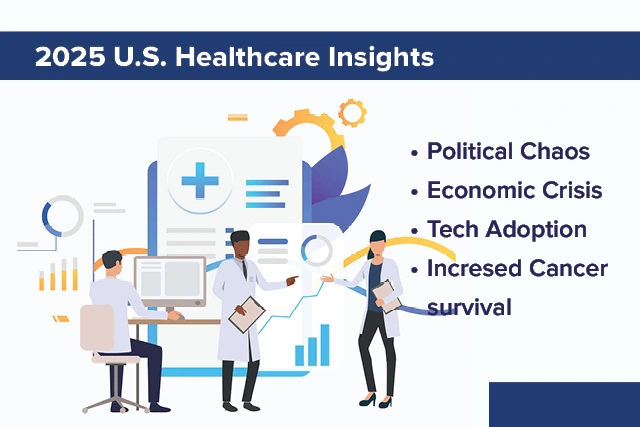
According to the American Hospital Association, hospitals in the USA have improved patient outcomes, as nearly 30% of hospitalized patients survived in the second quarter of 2025. From reductions in drug overdose deaths to cancer mortality, the United States has experienced a historical improvement in healthcare outcomes in 2025. Despite the historical improvements in outcomes of disease mortality and prevention rates, 2025 remained one of the most tempestuous years in the U.S. healthcare system. The year-long disruptions in the political, healthcare technology, and economic landscape of the country have not only influenced care delivery but also disease management.
A Mixed Healthcare Picture in 2025: Innovation and Inequity
The U.S. healthcare landscape in 2025 reflects a blend of rapid innovation and enduring systemic challenges. It felt like a system in motion, smarter, faster, but still strained. On the bright side, technology has reshaped care delivery in the country. A 2024 Statista report predicted that more than 1.4 billion people in the USA would adopt digital health in 2025, and this somewhat turned true.
Another statistic reveals that nearly 70% of U.S. hospitals integrated predictive AI tools into electronic health records, guiding clinicians flag high-risk patients early and reduce the rate of avoidable readmissions. In 2025, telehealth remained a staple, accounting for almost one in four outpatient visits, especially for mental health and chronic disease follow-ups. Apart from technology, chronic disease management improved significantly, from cancer survival to heart disease. Remote patient monitoring for diabetes and cardiovascular conditions reduced hospitalizations and allowed clinicians to intervene earlier.
However, the year was far from flawless. Hospital overcrowding persisted, driven by an aging population and workforce shortages. Emergency departments continued to see longer wait times, particularly in rural and underserved areas. Despite digital efficiency, healthcare costs rose again in 2025, pressuring both providers and patients. Inflation, staffing costs, and drug prices contributed to higher premiums and out-of-pocket expenses.
Concerns regarding health equality persisted. While urban healthcare facilities embraced artificial intelligence and automation, smaller hospitals lagged, amplifying care disparities in quality and access. Cybersecurity incidents increased as digital adoption expanded, reminding providers that innovation comes with risk.
Overall, U.S. healthcare in 2025 delivered smarter care—but not always fairer or cheaper care. The challenge ahead lies in balancing innovation with inclusion.
A Turbulent Year for the U.S. Healthcare: Find out How
This year, American healthcare has been thrust into the spotlight by sensational headlines and heated debates, as soaring medical costs and unprecedented healthcare orders have sent shockwaves through the industry. Join us as we unravel the turbulence that has defined the past twelve months.
The Political Chaos: Impeding Healthcare Accessibility and Uninterrupted Care Delivery
The ongoing political chaos began with Trump's return to office and the rapid reshaping of federal health agencies. With his sudden spate of executive orders, he targeted the Affordable Care Act (ACA), Medicare Advantage, Medicaid waivers, prior-authorization rules, and federal nutrition standards. His reluctance to mitigate the measles outbreak in Texas has raised concerns over public health. Policies overhauled ACA, banned Gender-Affirming Care, and paused global health divestment. Trump directives changing COVID-19 vaccination guidance created uncertainty and barriers to access. These shifts in policies increased healthcare costs, led to accessibility issues, and systemic uncertainty throughout the country.
Vulnerabilities in Mediclaim Coverages: An Economic Crisis Within the Sector
Political chaos has caused an economic crisis for many Americans, as they must pay more for care. Insurers in the Affordable Care Act marketplace requested 18% premium hikes for 2026, one of the largest increases since 2018. According to the Trump administration’s executive orders, if Congress does not extend ACA subsidies, families who once paid affordable premiums will see their costs double. The United States now spends $5.6 trillion annually on healthcare, and national health expenditures are expected to rise by 7.1%, outpacing economic growth. This crisis will continue to strain care for Americans in the coming year.
What Went Well For U.S. Healthcare in 2025?
Despite the challenges of Trump-driven executive orders largely affecting the U.S. economy and healthcare accessibility, the sector also witnessed positive growth in terms of technology adoption, disease prevention, improved care delivery, and more.
1. Cancer Survival Rate Increases Significantly
The historical cancer survival rates in the U.S. are a shift that positively transformed the picture of cancer care in the country. According to the National Cancer Institute, as of May 2025 United States had 18.6 million cancer survivors. As cancer mortality continued to decline in the USA, 1 out of every 18 Americans was a cancer survivor, and by 2035, that number is forecasted to reach 22 million.
2. Increased Adoption of Digital Health
In 2025, US health systems can be seen having 27% of AI adoption. According to Statista, Digital Treatment and Care will account for over $34 billion in revenue in the USA. These statistics reveal the rapid adoption of digital care across the country.
3. Improved Quality of Care
The OECD shows 80% of women in the country were screened for breast cancer in 2025, and 94% of eligible children were vaccinated against DTP. The 30-day mortality after AMI was 5.2% and 4.5% after stroke in the USA. Relying on these statistics, we can say that the country has facilitated improved quality care in 2025 across certain areas.
The Silicon Journal stands as a testament to quality and updated information sharing in the most creative way possible. We are consistently working to present what’s cooking across industries on the platter for readers to stay informed, competitive, and engaged with the ever-evolving business world.
Related Articles


Recent Articles





Latest Issue