Check Out the Best Progressive Web Apps in 2026
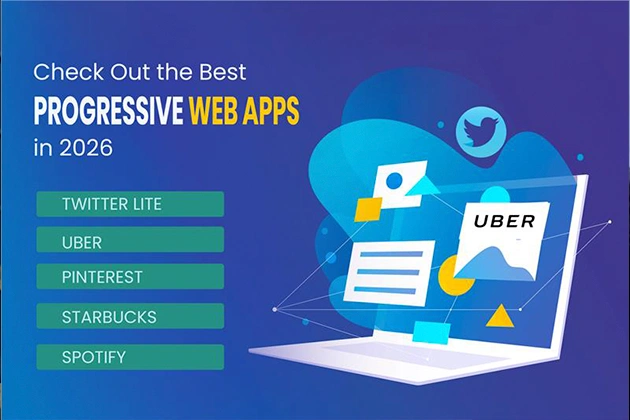
We have moved beyond the time when developing a tech-powered product was challenging, be it a website or a mobile application. Earlier, companies were hesitant to invest in building digital products due to the complexities and limitations associated with them. Native applications were expensive and heavy. However, over time, Progressive Web Apps (PWAs) filled the voids that native apps had. Gradually, they are transforming the scenario of web applications globally. As we have stepped into a new year, let us see what Progressive Web Apps 2026 have in store for us.
This article has been curated to inform readers about these applications, their importance in today’s world, and the best ones to rule in 2026.
Progressive Web Applications: Know All About These Apps
A progressive web application is an application built using web platform technologies, yet it offers an app-like user experience. Similar to a website, a PWA is designed to run on multiple platforms and devices, operate while offline, and in the background, and can easily integrate with a device and other installed applications. They are termed “progressive” due to their ability to enhance performance for better devices, but work everywhere. Apart from features like offline access, these apps offer push notifications, home screen installations, and device hardware accessibility. Web technologies such as HTML, JavaScript, and CSS are used to build these applications.
With PWAs, everything is made possible. From food ordering to ride-hailing, these applications are designed to connect consumers directly with companies. Nowadays, there is an app for everything, from studying to banking, and trading to shopping. They can be enhanced with modern APIs, making it easy to deliver improved capabilities with reliability. With the growing popularity of PWAs, companies have radically transcended into the product, including Uber, Twitter, Spotify, and more.
Things to Consider While Developing a PWA
Must be Installable
A PWA, as a product, provides users with the look and engagement of a native app. As users mostly engage with installed apps, a PWA must have that feature to attract high user attention.
Responsiveness
Different gadgets have different sizes, and PWA developers must ensure that users enjoy the product regardless of their devices’ sizes. Developers should develop the apps and their content for all screen sizes and viewport sizes.
Discoverability
As the majority of PWAs are converted websites, they must be made discoverable on the search engines. This helps in generating extra traffic to the applications. It is an added advantage of PWA that is missing in native apps.
Independent Connectivity
Keeping users engaged even when they are offline drives a more consistent experience than directing them back to a default offline page. For instance, in a music app, users are given the feature of accessing offline playlists and listening to saved music even when there is no internet connection.
Cross Platform
PWAs are engineered as web first app, which ensures their accessibility on all browsers or systems.
Appearance
The apps must feel and look like a native application. Hence, things like app icons and splash screens must be included while developing these apps to make them recognizable and similar to a native app.
Why Having a PWA is Advantageous?
As PWAs merge the reach and convenience of the web with the functionality of native mobile apps, they deliver the advantages of offline accessibility, enhanced performance, platform-specific features, low-data consumption, and app store independence. PWAs can be cached by the web browser and can be used in offline mode. This proves advantageous for businesses aiming to connect with their customers for high engagement, even when they are not connected to the internet. PWAs built on a ‘No-Code Low-code development’ process enable rapid development through visual interfaces and pre-built components, making the development accessible to a range of users. Due to this development procedure, PWAs often require simple maintenance and updates.
5 Best PWAS to Continue Gaining Popularity in 2026
Twitter Lite
The previous application of this globally used social media platform lacked agility and flexibility. However, with Twitter Lite, the platform experienced a 75% increase in tweet volume. This PWA is faster and has more features than before, making it one of the top PWAs in the world. As it uses a fraction of the device storage space compared to the previous one, this app is likely to gain more popularity in 2026 as well.
Uber
Uber PWA is extremely versatile and accessible, allowing it to run even in 3G or 2G networks. It can be downloaded in seconds and supports users of low-end devices. By enhancing its download process, Uber can reduce bounce rates and prevent customer loss in 2026.
As a social media platform designed to help people share creative ideas, plan projects, find recipes, and more, Pinterest (the one built with PWA technology) encourages users to spend more time on the site, increasing its revenue collection.
Starbucks
Starbucks' PWA allows customers to place orders, browse the menu, and more without downloading the mobile application. This app is also available offline for menu browsing and adding items to the cart, making it a preferred choice for many customers.
Spotify
Spotify is a one-stop solution for music lovers. This music-streaming company has been catering to the diverse needs of music freaks with Spotify PWA, a fast, reliable, and unobtrusive application. After its launch in 2019, the company experienced a free-to-play conversion rate of 46% from a conversion rate of 26.6% four years earlier. Allowing users offline accessibility to saved playlists, this music app will continue to win hearts in 2026.
The Silicon Journal offers access to information on diverse business and industry topics through its online publications. As an emerging business magazine, The Silicon Journal connects readers to the dynamic gl;obal business world for the latest insights, news, and information.
Related Articles


Recent Articles





Latest Issue