Retail Media Networks Advertising: Relevance to Modern Marketing
As technology continued to transform business operations, its indomitable power also influenced the ways businesses advertise and promote their products and services. Retail Media Networks Advertising is one such marketing approach that has enabled retail brands to enhance their visibility and consumer engagement.
Retail Media Networks (RMNs) let brands purchase advertising space directly on a retailer’s website, in-store, or application by leveraging retailers’ shopper data to design highly personalized advertising campaigns. In this advertising process, sponsored products, advertisements, or banners are visible to consumers at the time of purchase, marking the relevance of this marketing approach in today’s competitive business environment. It uses closed-loop attribution to directly link ad exposure to sales, unlocking optimization and high return on investment (ROI).
Let us understand the importance of marketing for retailers with a simple example. Former Head of Amazon media Lisa Utzschneider once stated that imagine an Amazon with advertisements and lower prices, and imagine another Amazon with no ads and higher prices. Now, question yourself, which Amazon would you choose as your preferred retailer? The answer would be quite obvious- Amazon with ads and lower prices.
Although retailers have always been advertisers, they are pivoting towards enhancing their advertising businesses to ensure improved omnichannel retailing. Multinational retailers like Amazon have pushed the boundaries of traditional retailers, compelling them to improve their omnichannel retail offerings and enhance consumer experiences. To fund this retail transformation, retailers rely on Google and Facebook’s advertising models, creating retail media networks to finance their first-party consumer data.
As a trusted source of business information, The Silicon Journal enlightens readers about the recent trends, technology, and innovation influencing the course of operations across businesses. Standing at the edge of business development, our magazine serves as a trusted information source to stay competitive and informed.
This article aims to clarify readers’ understanding of retail media networks, how they work, advantages and disadvantages, and their relevance in today’s competitive business world.
Retail Media Networks in a Nutshell
eMarketer defines a retail media network as “an asset owned and operated by a retailer that publishes advertisements, or a third-party publisher with ads that leverage a retailer’s first-party shopper data.” Retailers gather data about consumers’ shopping behavior and leverage it to personalize customers’ shopping experiences, and the advertisements also.
Let’s understand how this works. Retailers collect data related to your shopping behavior. They can use, for example, your shopping profile to learn about your shopping preferences through your interactions with the platform. This helps them influence the ads you see or hear on social media and other online platforms. Retail media networks seamlessly translate impressions to sales on a specific platform, something less available before.
If we want to trace back to the roots of retail media, one event that comes to mind is the introduction of Amazon’s advertising solution, AAP, or Amazon Ads Platform, in 2012. However, using consumer data to personalize offers and pushing them at the point of purchase was not a new idea in itself. Before Amazon, many grocery chains and giant retailers have always featured in-store promotions and displays. What made Amazon’s advertising solution unique was its unprecedented automation and scale.
The growth of Amazon from $600 million in 2012 to $45 billion in 2023 is a testament to its unwavering commitment to helping businesses achieve ultimate success in consumer engagement, marking the beginning of a new era in modern marketing. Amazon’s success influenced several global retailers to enter the media business, including Kroger, Walmart, Target, The Home Depot, and more. Their contribution is flourishing a sector growing at twice the speed of social media.
Benefits and Loopholes of RMN
As RMN leverages powerful analytics to enhance business performance, let us identify what advantages it provides to businesses.
1. Access to First-Party Consumer Data
As we have already discussed, RMN relies on consumer data to personalize marketing. Retail media networks allow complete accessibility to retailer-collected data, including purchasing history, browsing behavior, and more, to craft that highly targeted marketing campaign to convert leads into sales.
2. Enhanced Brand Visibility
Through in-context and appropriate product placement within search results or product pages, RMNs increases brand visibility.
3. ROAS
Retail advertisers directly link ad impressions to sales, offering a clear picture of return on Advertising Spend.
4. Expanded Omnichannel Opportunities
RMNs are bridging the gap between online browsing and in-store actions using data-driven insights and digital displays, connecting all dimensions of the consumer journey. This expands the opportunities for omnichannel marketing.
While effective for targeting, RMN suffers from high costs due to intense competition, creating barriers for smaller brands. Some of its disadvantages include:
1. Rising Competition and High Cost
World-class RMNs are highly competitive. Their competitiveness inflates costs and reduces return on investments for smaller brands.
2. Fragmented Reporting
As many retailers are operating their own digital ecosystem, evaluating, comparing, and optimizing campaigns across various platforms, it becomes difficult for them to remain consistent in reporting.
3. Strategic and Inventory Risks
Ads in RMN may run without real-time inventory synchronization, which causes excessive spend on out-of-stock items.
Best RMN Strategies to Follow in 2026
Conversational RMN
Conversational & voice search optimization within RMNs is gaining popularity for capturing long-tail, high-intent, and spoken queries that drive sales in a “voice-first” shopping environment. As more than 50% of internet users are using voice assistants in the USA, its popularity has enabled brands to utilize voice-enabled tools to collect consumer data on platforms like Google and Amazon.
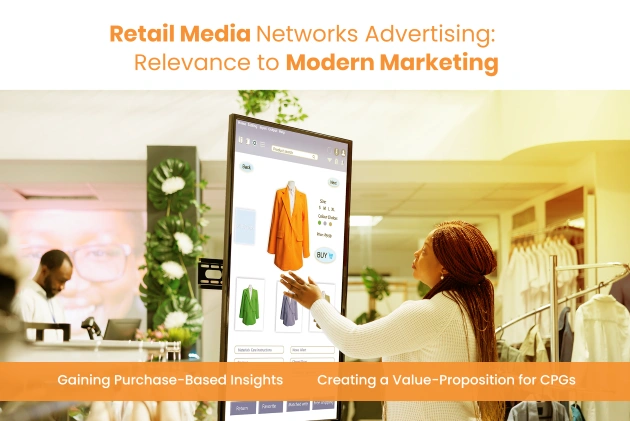
Gaining Purchase-Based Insights
As mentioned above, RMNs collect data about consumers’ shopping habits. These data help them gain a purchase-based insight into their preferences to tailor ads and offers accordingly. This improves consumers’ shopping experiences and drives sales to businesses.
Creating a Value-Proposition for CPGs
RMN profitability can be increased by increasing the value proposition for consumer-purchased goods. For example, customer purchase history can be gathered from a grocery retailer to inform RMN targeting for a CPG brand aspiring to enhance repeat purchases. Combining purchasing history with a customer’s streaming data can unlock new consumer segments with targeted advertising.
Related Articles


Recent Articles





Latest Issue